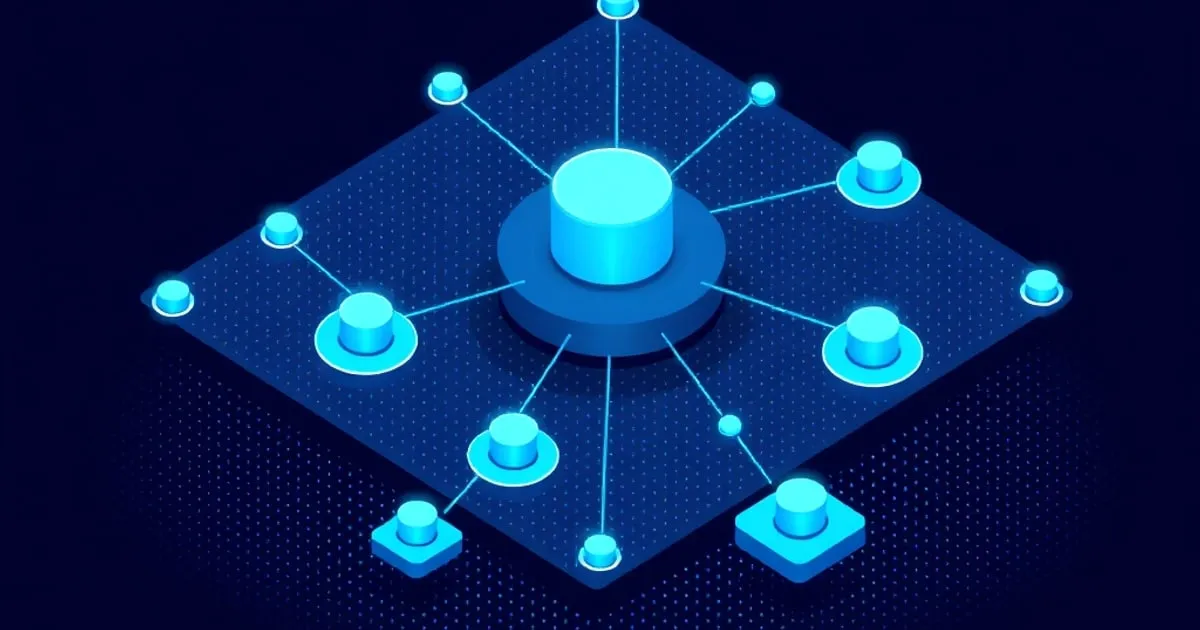
RAG Observability: Monitoring the Retrieval Layer in Production
When a RAG system gives a bad answer, the retrieval layer is usually to blame — and your LLM monitoring can't see it. How to instrument retrieval quality with context precision, recall, and faithfulness in production.
The most common RAG debugging mistake is blaming the model. A user reports a wrong answer, the team inspects the LLM call, finds nothing obviously broken, and concludes the model “hallucinated.” Often it didn’t. It faithfully summarized the documents it was given — and the documents were the wrong ones. The failure was in retrieval, a layer your LLM-centric monitoring does not even watch. RAG observability is the discipline of making that layer visible, because in a retrieval-augmented system, retrieval is where most quality problems actually originate.
Why RAG needs its own monitoring layer
A RAG response is a pipeline, not a call: embed the query, retrieve candidate chunks, optionally re-rank, assemble context, generate. The generation step — the LLM — is the last link, and it is the only one most teams instrument. But quality can collapse at any earlier link while the LLM behaves perfectly:
- The embedding model was swapped or its version changed, and the vector space no longer matches the indexed documents.
- The index went stale — new documents were not ingested, or deleted ones were not purged.
- Chunking split a key fact across two chunks so neither alone answers the question.
- Retrieval returned plausible-but-wrong chunks — semantically near the query, but not the ones containing the answer.
In every one of these, the LLM gets bad context and produces a bad answer correctly. Watching only the LLM, you see “model gave wrong answer” with no further signal. This is the retrieval-vs-model distinction we flag in our piece on silent quality decay ↗: RAG quality decay is its own failure mode and must be tracked on the retrieval layer, not the LLM layer. Conflating them sends you debugging the wrong component.
The metrics that decompose retrieval quality
The open-source framework that defined the standard RAG metrics is RAGAS ↗, and its metric set is the right vocabulary because each metric isolates a different link in the pipeline. The retrieval-and-generation metrics it documents include:
- Context Precision — of the chunks you retrieved, how many are actually relevant, and are the relevant ones ranked near the top? Low context precision means your retriever is pulling noise, or your ranking is wrong. This is a retriever/re-ranker signal.
- Context Recall — does the retrieved context contain everything needed to answer? Low recall means the answer’s supporting evidence wasn’t retrieved at all — an index, chunking, or top-k problem. This is the metric that catches “the answer wasn’t in the context.”
- Context Entities Recall — a sharper, entity-level view of recall, useful when answers hinge on specific named entities being present.
- Faithfulness — does the generated answer stay grounded in the retrieved context, without adding unsupported claims? Low faithfulness with good context is a genuine generation problem (the model is confabulating beyond its sources). This is a generation signal.
- Response Relevancy — does the answer actually address the question asked, regardless of grounding?
- Noise Sensitivity — how easily the system is thrown off by irrelevant retrieved chunks.
The diagnostic power is in the combination. Faithfulness high but context recall low means retrieval failed to surface the evidence — fix the retriever, not the prompt. Context recall high but faithfulness low means the right documents were retrieved and the model ignored or contradicted them — fix the generation prompt, not the index. A single “quality” score collapses these into one number and tells you nothing about which to fix. That decomposition is the entire point of RAG-specific metrics.
A practical note: most of these metrics are computed by an LLM judge (RAGAS pioneered reference-free, LLM-as-judge RAG evaluation), so the judge-calibration cautions from our eval pipeline guide ↗ apply directly — use a capable judge, validate it against human labels on a sample, and treat its scores as noisy aggregates rather than per-response truth.
From offline eval to production observability
RAGAS metrics shine in offline evaluation — scoring a fixed test set in CI or before a release. Production observability is a different mode: you need these signals on live traffic, continuously, with the per-request traces to debug specific failures. Two pieces make that work.
Trace the full chain. Every RAG request should emit a trace spanning the query embedding, the retrieval call (with the retrieved chunk IDs and their similarity scores), any re-ranking, the assembled context, and the generation. OpenLLMetry’s gen_ai.* and retrieval span conventions ↗ standardize this so the trace is portable across tooling. Without the trace, “this answer was wrong” is unactionable; with it, you can see exactly which chunks were retrieved with what scores and whether the answer used them — turning a vague complaint into a precise diagnosis.
Monitor retrieval signals that need no labels. Several high-value retrieval signals are computable on every request without any ground truth:
- Retrieval similarity-score distribution. If the top-k chunks’ similarity scores drift downward over time, your queries are increasingly far from anything in the index — a strong early warning of index staleness or query drift, computable for free.
- Retrieved-chunk source distribution. A sudden shift in which documents get retrieved can signal an ingestion change or an index problem.
- Empty/low-confidence retrieval rate. The fraction of queries where nothing crosses a similarity threshold is a direct coverage gap metric.
- Query embedding drift. Track the production query distribution in embedding space against your evaluation set — the same embedding-drift technique Arize Phoenix ↗ ships for inputs. When users start asking things your index doesn’t cover, this moves before answer-quality complaints do.
These label-free signals are your leading indicators; periodic RAGAS-style judge-graded sampling on production traffic is your lagging quality measurement. The pairing mirrors the leading/lagging discipline that runs through all of production LLM monitoring.
A production RAG observability stack
Pulling it together:
- Full-chain tracing on every request — query embedding, retrieved chunk IDs + scores, re-ranking, assembled context, generation — via OpenLLMetry-compatible spans.
- Label-free retrieval monitors — similarity-score distribution, empty-retrieval rate, source distribution, query embedding drift — as real-time leading indicators.
- Sampled RAGAS-style scoring on live traffic — context precision/recall and faithfulness, computed by a calibrated judge on a stratified sample — as lagging quality, decomposed by pipeline stage.
- A wrong-answer triage path that uses the trace to attribute each failure to retrieval (bad/missing context) or generation (good context, bad answer), so fixes land on the right component.
Tools in the space include Arize Phoenix ↗ (open-source tracing, retrieval inspection, and embedding-drift visualization), RAGAS (the offline evaluation framework), and LangSmith and Langfuse for traced RAG monitoring; mlobserve.com ↗ surveys how their RAG-specific support compares as of 2026.
The core idea is small but the leverage is large: in a RAG system, retrieval is a first-class component with its own failure modes, and it needs its own metrics. Treat the retriever as observable infrastructure — trace it, monitor its label-free signals, score it separately from generation — and the next “the model hallucinated” report resolves in minutes to “the index was stale” instead of an afternoon of staring at a correct LLM call wondering what went wrong.
For the broader monitoring context, mlmonitoring.report ↗ covers how retrieval observability fits alongside drift detection and the leading-vs-lagging indicator model.
Sources
- Available Metrics — RAGAS documentation ↗ — Context precision, context recall, context entities recall, faithfulness, response relevancy, and noise sensitivity, with how each isolates a pipeline stage.
- Phoenix — Arize AI documentation ↗ — Open-source RAG tracing, retrieval inspection, and embedding-drift visualization.
- OpenLLMetry — Traceloop ↗ — OpenTelemetry span conventions for tracing the full retrieval-and-generation chain.
Sources
LLMOps Report — in your inbox
Operating LLMs in production — eval, observability, cost, latency. — delivered when there's something worth your inbox.
No spam. Unsubscribe anytime.
Related
LLMOps Best Practices 2024: From Prototype to Production-Grade
A practitioner's guide to the LLMOps best practices that separate fragile demos from reliable production systems: prompt versioning, observability, evaluation, and cost governance.
Token-Cost Observability: What You Measure vs What You Should
Most LLM apps track total spend and call it done. The interesting signals — per-feature cost, per-user attribution, anomaly bands — require deliberate instrumentation.
Semantic Caching for LLM Serving: When the Cache Hit Is Not a String Match
Exact-match caching misses most LLM cache hits — paraphrases tank hit rate. Semantic caching, threshold tuning, and the production failure modes that bite.